Showing posts with label bread. Show all posts

Thursday, March 28, 2013

Make Ahead Soft White Bread


There's nothing better than fresh bread.  

Sometimes I want to get a jump on things and bake bread in the morning.  But who's got time for that?  I know I don't want to get up a 0'dark:30 even if it mean hot, fresh bread start the day with.

Did you know that the prefered method for making bread is a slow, cold rise?  The bread is better textured and has much more flavor.  

Make the dough as normal and take it out in the morning to rise.  Bake it and you have lovely loaves of bread and you'll be a hero to your family!


Soft White Bread (makes 2 loaves)


1 Cup Hot Water
½ Cup Milk 
2 Tablespoons Sugar
2 Teaspoons Dry Yeast
2 Teaspoons Salt
Approximately 6 Cups All-Purpose Or Bread Flour
2 Tablespoons Unsalted Butter, Softened
2 Eggs


Combine hot water and cool milk.  Mixture should be just warm to the touch.  Add sugar and yeast and allow yeast to proof - about 15 minutes.

In a separate bowl, mix together the salt and 3 cups of the flour.

Add eggs and butter to yeast and mix well.  Add two cups of the flour/salt blend and mix well.  

Add the rest of the flour/salt mixture (and then switch to the dough hook attachment if using the stand mixer), and then keep adding the remaining 3 cups of flour, about half a cup at a time, until the mixture forms a ball and pulls away from the sides of the bowl.

Turn the dough out onto a lightly floured board and knead for about 10 minutes, or until the dough becomes smooth and elastic.  

Place the dough in a large, lightly oiled bowl and cover with plastic wrap or a damp towel.  Allow the dough to rise about 30 minutes.  


Then put plastic wrap over the bowl and put the bowl in the refrigerator.

Whenever you're ready to bake the bread, remove the dough from the refrigerator.  Press out any large air pockets.  

Shape into balls, place in a warm (air-temperature) bowl and allow the dough to come to room temperature.

Lightly grease your two loaf pans.

Press each ball down into an oblong shape about the length of your baking pan, then roll tightly into a log and pinch the edges together tightly to seal.  Fold the ends under and place the dough in a loaf pan, seam side down. 

Cover the pans with a lightly oiled piece of foil or plastic wrap and allow to rise again.  When the dough is about level with the edge of the pan, preheat your oven to 400 degrees F.

When the dough has risen about an inch above the pan, it’s ready.  Remove the foil/plastic wrap and place on a rack in the center of the oven.  Bake about 30 minutes, or until golden brown.  

To check, turn out one of the loaves and tap the bottom - if it sounds hollow, it’s done.  If it’s not done, bake another ten minutes or so and tap again.

When the bread comes out, remove from the pans and allow to cool before slicing.  


Yum!

Wednesday, March 13, 2013

Easy Yeast Bread


There may be nothing on this earth that smells as good as baking bread. It may seem a daunting task but baking bread is easy and rewarding.  

This is a super easy recipe that is good for beginners.  

Easy Yeast Bread


3/4 Cup Warm Water
1 Package Active Dry Yeast
1 Tsp Salt
1-1/2 Tbsp Sugar
1 Tbsp Vegetable Shortening
1/2 Cup Milk
3 Cups All-Purpose Flour
1 Tbsp Vegetable Oil


In large bowl, add the sugar to the warm water.  Stir until all the sugar is dissolved.  Stir in yeast.  Allow to sit for about 5 minutes until yeast is bubbly.

Add salt, shortening, and milk to bowl. Stir.

Mix in the first 2 cups of flour.


You may not need all three cups of flour.  But, if needed, begin adding more flour, one tablespoon at a time, until the dough makes a soft dough.

Turn dough out onto floured board and knead, adding small spoonfuls of flour as needed, until the dough is soft and smooth, not sticky to the touch.

Add the oil to the bowl.  Put dough in the bowl, and turn over so that is covered in oil. Cover with a moistened towel and let rise in warm spot for 1 hour.

Punch down dough. Turn out onto floured board and knead.

Preheat oven at 375 degrees F. 

Form dough into loaf and set in buttered bread pan. Cover and let rise for about 30 minutes.

Put in oven and bake for about 45 minutes or until golden brown.

Turn out bread and let cool on a rack.

Wednesday, February 20, 2013

No-knead Crusty Beer Bread


This is a beerific spin on my favorite bread recipe.  This bread is super easy to make, almost no work at all, you just need to plan a day ahead to get it started before you bake it; about 1½ hours plus 14 to 20 hours for rising

The bread comes out super crusty on the outside and moist in side.  Perfect for serving with something saucy to sop up juices with, or an oil dip it in, or slathered with butter. 

And it's made with beer.  It's practically perfect!

I made this loaf with Apollo from Six Point, I figured using a wheat beer to make bread was sort of appropriate, but you can use any beer you like.

No-knead Crusty Beer Bread


3 Cups All-Purpose Or Bread Flour, More For Dusting
¼ Teaspoon Instant Yeast
1¼ Teaspoons Salt
Cornmeal Or Wheat Bran As Needed
1 Can Or Bottle Beer


In a large bowl combine flour, yeast and salt. Add 1 5/8 cups beer, and stir until blended; dough will be shaggy and sticky. Cover bowl with plastic wrap. Let dough rest at least 12 hours, preferably about 18, at warm room temperature, about 70 degrees.

Dough is ready when its surface is dotted with bubbles. Lightly flour a work surface and place dough on it; sprinkle it with a little more flour and fold it over on itself once or twice. Cover loosely with plastic wrap and let rest about 15 minutes.

Using just enough flour to keep dough from sticking to work surface or to your fingers, gently and quickly shape dough into a ball. Generously coat a cotton towel (not terry cloth) with flour, wheat bran or cornmeal; put dough seam side down on towel and dust with more flour, bran or cornmeal. Cover with another cotton towel and let rise for about 2 hours. When it is ready, dough will be more than double in size and will not readily spring back when poked with a finger.

At least a half-hour before dough is ready, heat oven to 450 degrees. Put a 6- to 8-quart heavy covered pot (cast iron, enamel, Pyrex or ceramic) in oven as it heats. When dough is ready, carefully remove pot from oven. Slide your hand under towel and turn dough over into pot, seam side up; it may look like a mess, but it will be okay. Shake pan once or twice if dough is unevenly distributed; it will straighten out as it bakes. 

Cover with lid and bake 30 minutes, then remove lid and bake another 15 to 30 minutes, until loaf is beautifully browned. Cool on a rack.

Yield: One 1½-pound loaf.

Wednesday, February 6, 2013

Amish Bread


I received a grain mill as a gift along with five pounds of wheat berries.  When choosing a recipe I decided to go with one that seemed most appropriate to go along with fresh ground wheat.  I went with an Amish bread recipe.  It was a good choice.  Delish!

Amish Bread

Makes 2 - 9x5 inch loaves

 2 cups warm water (110 degrees F/45 degrees C)
 2/3 cup raw sugar
 1 1/2 tablespoons active dry yeast
 1 1/2 teaspoons salt
 1/4 cup vegetable oil
 6 cups whole wheat flour

In a large bowl, dissolve the sugar in warm water, and then stir in yeast. Allow to proof until yeast resembles a creamy foam.

Mix salt and oil into the yeast. Mix in flour one cup at a time. Knead dough on a lightly floured surface until smooth. Place in a well oiled bowl, and turn dough to coat. 


Cover with a damp cloth. Allow to rise until doubled in bulk, about 1 hour.Punch dough down. Knead for a few minutes, and divide in half.

Shape into loaves, and place into two well oiled 9x5 inch loaf pans. Allow to rise for 30 minutes, or until dough has risen 1 inch above pans.

Bake at 350 degrees F (175 degrees C) for 30 minutes.

Remove from oven and turn out of pan onto a rack.  Tap on the bottom of a loaf to test for doneness - it should sound somewhat hollow.

Allow to cool - if you can - before slicing.

Tuesday, January 15, 2013

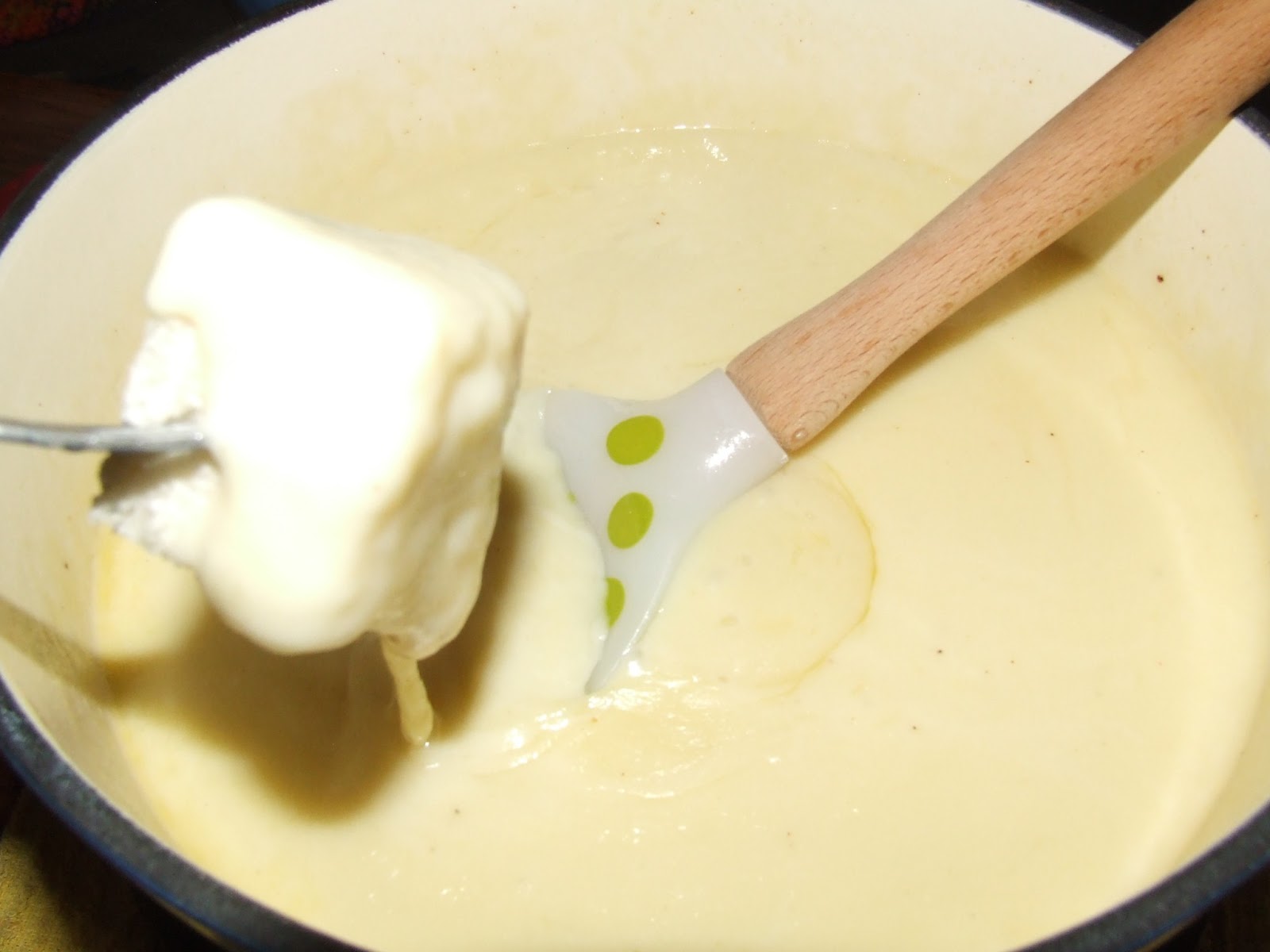
Cheese Fondue

This is one of the things I do for New Year's Eve.  Fondue is really easy and fun for everyone.  And . . . who doesn't like cheese!


Cheese Fondue


1/2 Pound Imported Jarlsburg Cheese, Shredded
1/2 Pound Gruyere Cheese, Shredded
2 Tablespoons Cornstarch
1 Garlic Clove, Peeled
1 Cup Dry White Wine
1 Tablespoon Lemon Juice
1 Tablespoon Cherry Brandy, Such As Kirsch
1/2 Teaspoon Dry Mustard
Pinch Nutmeg


In a small bowl, coat the cheeses with cornstarch and set aside. Rub the inside of the ceramic fondue pot with the garlic, then discard.

Over medium heat, add the wine and lemon juice and bring to a gentle simmer. Gradually stir the cheese into the simmering liquid. Melting the cheese gradually encourages a smooth fondue. Once smooth, stir in cherry brandy, mustard and nutmeg.

Arrange an assortment of bite-sized dipping foods around fondue pot. Serve with chunks of French and pumpernickel breads. Some other suggestions are Granny Smith apples and blanched vegetables such as broccoli, cauliflower, carrots and asparagus. Spear with fondue forks or wooden skewers, dip, swirl and enjoy!

Thursday, December 13, 2012

Perfect French Bread Rolls


These rolls are perfect and delicious.  Easy to make, they go great with any meal.  Make ahead to go with your holiday dinner . . . impress your friends and family.

Perfect French Bread Rolls


1 1/2 Cups Warm Water (110 Degrees F)
1 Tablespoon Active Dry Yeast
2 Tablespoons White Sugar
2 Tablespoons Vegetable Oil
1 Teaspoon Salt
4 Cups Bread Flour


In a large bowl, stir together warm water, yeast, and sugar. Let stand until yeast is foamy, about 10 minutes.

To the yeast mixture, add the oil, salt, and 2 cups flour. Stir in the remaining flour, 1/2 cup at a time, until the dough has pulled away from the sides of the bowl. 

Turn out onto a lightly floured surface, and knead until smooth and elastic, about 8 minutes. 

Lightly oil a large bowl, place the dough in the bowl, and turn to coat. 


Cover with a damp cloth, and let rise in a warm place until doubled in volume, about 1 hour.

Punch down the dough, and turn it out onto a lightly floured surface. Divide the dough into 16 equal pieces, and form into round balls. Place on lightly greased baking sheets at least 2 inches apart. 

Cover the rolls with a damp cloth, and let rise until doubled in volume, about 40 minutes. 

Meanwhile, preheat oven to 400 degrees F (200 degrees C).

Bake for 18 to 20 minutes in the preheated oven, or until golden brown.

Wednesday, July 11, 2012

The best thing since sliced bread

It has been 100 years since Otto Rohwedder invented a machine that automatically cut loaves of bread into slices.  Prior to this, consumers would purchase whole loaves of bread from their local bakery and cut it up themselves . . . this invention paved the way for commercial bakeries to sell pre-sliced loaves of bread.


Five years later, in 1917, major fire broke out in the factory where his slicing device was being manufactured  . . . destroying the blueprints.  


Not discouraged, he continued refining his design.  Including modifying his machine in such a way in to keep the bread fresh by creating a device that not only sliced the bread but wrapped it, as well.  


This was the improvement that finally got the baking industry fired up about his product and sales boomed  . . . so much so that he could barely keep up with the demand.


But it wasn't until 1930 that he saw his greatest success.  Wonder Bread . . . you know the white squishy bread in the colorful packaging . . . hit the store shelves and became wildly popular.  There was no turning back . . . it was at this point when more sliced bread was sold than whole loaves.


The man was a genius!  I mean really . . . the invention of sliced bread is the thing against which all things are measured.  How many times have you heard or said . . . "that's the best thing since sliced bread!"?


Zucchini Bread Recipe

2 Eggs, Beaten
1 1/3 Cup Sugar
2 Teaspoons Vanilla
3 Cups Grated Fresh Zucchini
2/3 Cup Melted Unsalted Butter
2 Teaspoons Baking Soda
Pinch Salt
3 Cups All-Purpose Flour
1/2 Teaspoon Nutmeg
2 Teaspoons Cinnamon
1 Cup Chopped Walnuts (Optional)
1 Cup Dried Raisins (Optional)

Preheat the oven to 350°F.  In a large bowl, mix together the sugar, eggs, and vanilla. Mix in the grated zucchini and then the melted butter. Sprinkle baking soda and salt over the mixture and mix in. Add the flour, a third at a time. Sprinkle in the cinnamon and nutmeg and mix. Fold in the nuts and dried cranberries or raisins if using.

Pour batter into an 9 x 13 baking dish and bake for 45 minutes - or - divide the batter equally between 2 buttered 5 by 9 inch loaf pans and bake for 1 hour.  Done when a wooden pick inserted in to the center comes out clean.

Monday, May 14, 2012

The time will come when it will disgust you to look in the mirror

At the risk of putting my inner-geekiness on full display . . . 


Hubby and I have been watching all the episodes of all the Star Trek series on Netflix.  We are currently on Voyager.  The other day we watched "Revulsion", which is the 73rd episode and the fifth of the fourth season.


It was interesting because it kind of makes you realize how really gross and disgusting we "biotics" are.  I can picture the writer of this installment being a total OCD germaphobic neatnic.


The basic premise of this episode was that there was a mentally unstable, xenocidal holograph is disgusted by "organics."  Among other things he was sickened about the hair and skin we slough off, the oils and sweat we leave everywhere, and other bodily fluids and excretions we eliminate.


Okay . . . so how yucky are we . . . really?


On average, there are over one hundred thousand strands of hair on a typical human head . . . age, alopecia and hirsuteness, notwithstanding.  It's interesting to note that blondes have the most hairs, followed by brunettes and redheads have the least amount of hairs.   Most people lose approximately 100-200 strands of hair per day . . . all those hairs in the drain don't necessarily mean you're going bald.


Did you know that your skin is the largest organ of the human body . . . that's right your skin is an organ.  And, it is constantly regenerating.  Of the billions of skin cells, somewhere between 30,000 and 40,000 of them fall off every hour . . . that's nearly a million skin cells in a day.


Additionally, you're body is constantly excreting sweat and oils either for waste elimination, lubrication or cooling.  And then, of course, there are the other fluids and solids our bodies dispose of for various reasons . . . waste removal, procreation, lubrication . . . you get the picture.


Yup . . . we're gross and artificial life forms hate us . . . c'est la vie.


Cheesy Garlic Bread

The secret to really good garlic bread is fresh garlic  . . . and cheese!

1 Cup Butter, Softened
4 Garlic Cloves
1/4 Teaspoon Dried Oregano
1 (1 Pound) Loaf Italian Bread, Halved Lengthwise
2 Cups Mozzarella Cheese

Preheat oven to 400 degrees F.

Mince garlic in a food processor.  Add butter and oregano and process until combined.  Spread on cut sides of bread.

Place bread on a cooking sheet and bake bread until toasty brown.

Sprinkle with cheese. Cook until cheese is melted. Slice and serve hot.


“The time will come when it will disgust you to look in the mirror.”
 Rose F. Kennedy 

Saturday, April 14, 2012

A little slice of heaven

When I was kid my family didn't have a lot of money.  A single mom with two little kids . . . it was rough but we didn't suffer.  Mom made do with what she had . . . she was economical; she gardened and canned the produce, she bought milk and meat from local farmers, she shopped with coupons and looked for bargains.


There was always food in the house but you didn't eat anything without prior approval; groceries were purchased for intended meals.  And, because we lived about 30 miles from the nearest grocery store you couldn't just go pick something up at the corner store if you ran out.  


And, because we lived so far from the store mom did one major shopping trip a month . . . that's right . . . grocery shopping once a month.  Everything that was freezable was frozen and everything else was either refrigerated or non-perishable. Towards the end of the month pickins were getting slim.


I was what would be classified today as a latchkey-kid. So, when I got home from school and wanted a snack sometimes I had to get creative. Chips, pretzels, corn chips?  I don't think so . . . mom didn't have junk food in the house.   Getting close to shopping time there wasn't always stuff to make a full-blown sandwich.    But there was always bread.  


Options were often minimal . . . sometimes I'd make a cheese and mustard sandwich.  


Peanut butter and jelly was another choice.  Sometimes I might make a peanut butter and dill pickle sandwich . . . don't knock 'til you try it; sweet and sour and crunchy.  And if there were Bacos . . . peanut butter and Bacos; sweet and salty and crunchy.


Now if the cupboards were really running low there was always mayonnaise or ketchup.  So, I'd hook myself up with a plain ol' mayonaise sandwich (or Miracle Whip, even better) or a plain ol' ketchup sandwich . . . take a piece of bread slather some mayo or ketchup on it and eat.  Don't laugh . . . sometimes you gotta do what ya gotta do.


My favorite, however, was cinnamon/sugar bread . . . smear some margarine on a piece of bread and sprinkle with cinnamon and sugar.  Like a little slice of heaven.  


Cinnamon Toast Rolls

12 Slices of Very Soft, Fresh White Bread
1/4 Cup Melted Butter
Cinnamon Sugar (1 Tbsp Cinnamon to ½ Cup Sugar)

Preheat the oven to 375 degrees.

If desired, cut the crusts from a slice of bread.  Roll until very thin. Spread both sides of the bread with melted butter and then sprinkle one side with the cinnamon sugar, making sure to cover very well.  


Fold each side into the middle and then gently roll up and place in a buttered mini muffin tin.  Sprinkle with a little more cinnamon sugar.  

Alternately, you can fold the bread into a triangle, and then fold into another smaller triangle and place on a parchment-covered baking sheet.


When all of the rolls are made, bake for 15 to 20 minutes, or until they are just starting to turn golden brown and get a little crisp.  Remove from the muffin tin to cool.

If desired, drizzle with some icing made with powdered sugar that's been moistened with a little milk.

Thursday, July 7, 2011

Love is like an hourglass, with the heart filling up as the brain empties

Is French Toast really and truly French?  Although France has their own version of this nom-dilly-ish-ous breakfast treat it doesn't originate there.  Prior to World War I, the dish was commonly known as German toast in America, but that the name was changed due to anti-German sentiment. 


There is a different version of “French Toast” in many cultures . . . back in medieval times, when food was often scarce; every bit of food was used including what we would typically chuck in the garbage bin without a second thought.  Old stale bread was no exception; the bread would be soaked in egg to add moisture and protein and then fried in hot fat.  Even the wealthy enjoyed the egg dipped bread . . . except they would use the most expensive breads, indulgently remove the crusts and douse the toast in honey.


In fact, recipes for "French toast" can be traced to ancient Roman times.  The original French name is pain a la Romaine', or Roman bread.
French toast is so simple and inexpensive, it's no wonder it's been around so long.  Yummers!
___________________________


Strawberry-Cream Cheese Stuffed French Toast


  • One 1- To 1 1/4-Pound Loaf Of White Bread 
  • 8 Ounces Cream Cheese, Softened
  • 2 Tablespoon Strawberry Preserves
  • 1/2 Cup Whole Milk
  • 4 Large Eggs
  • 1 Teaspoon Pure Vanilla Extract
  • 2 Tablespoons Gran Marnier         
  • Pinch Salt
  • Unsalted Butter
  • Real Maple Syrup, Warmed


Mash the cream cheese with the preserves.  The mixture should be thick and chunky.  You can smooth it out in a food processor, if you prefer (I did).

In a shallow dish or bowl, whisk together the milk, eggs, Gran Marnier, and vanilla.

Dunk the stuffed bread slices into the egg mixture and turn to coat evenly, until saturated but short of falling apart.

Warm 1 tablespoon butter in a large heavy skillet over medium heat. Briefly cook the French toast in batches until golden brown and lightly crisp, turning once.

Place the first slices on a plate and top with a dollop of cream cheese.  

Top with a second slice and another dollop of cream cheese.  

Garnish with a sliced strawberry and drizzle with syrup. 

Thursday, June 16, 2011

A loaf of bread, a jug of wine, and thou


I’ve had problems making rye bread.  It just never seems to come out right.  It turns out that the rye flour you buy in a store is ground too fine and that makes the bread like glue inside.


That’s why most recipes instruct to mix some wheat flour with the rye flour.  Even better, buy rolled rye flakes, put them in the food processor or blender and grind until it is the texture of cornmeal.

Then use whole wheat flour made from hard wheat instead of regular white flour but add about 25% unbleached bread flour for a portion of all flour.

The dough should be fairly heavy and sticky because the coarse rye and the wheat will soak up some water during kneading, rising and baking.

You do NOT need caraway seeds to make it taste like rye bread.  I like them so I add them.

You don’t need a sour.  You can get by with making a "young" sour or sponge the evening before you bake.

This is the recipe I used.  It came out better than other rye breads I have made.  Very tasty.

Makes one 1 3/4-pound round loaf

Sponge
3/4 Cup Bread Flour
3/4 Cup Rye Flour
1/2 Teaspoon Instant Yeast
2 Tablespoons Sugar
1 1/2 Cups Water, At Room Temperature

Flour Mixture
2 1/4 Cups Bread Flour
1/2 Plus 1/8 Teaspoon Instant Yeast
2 Tablespoons Caraway Seeds
1/2 Tablespoon Coarse Salt

Dough And Baking
1/2 Tablespoon Vegetable Oil
About 2 Teaspoons Cornmeal For Sprinkling

Make the sponge: Combine sponge ingredients in a large or mixer bowl and whisk until very smooth, to intentionally incorporate air — this will yield a thick batter. Set it aside.

Make the flour mixture and cover the sponge: In a separate large bowl, whisk together the flour mixture and gently scoop it over the sponge to cover it completely. Cover the bowl tightly with plastic wrap and allow it to ferment for 1 to 4 hours at room temperature. (The sponge will bubble through the flour mixture in places.)
Mix the dough [Either with a mixer] Add the oil and mix with the dough hook on low speed for about 1 minute, until the flour is moistened enough to form a rough dough. then raise the speed to medium and mix it for 10 minutes. The dough should be very smooth and elastic, and it should jump back when pressed with a fingertip; if it is sticky, turn it out on a counter and knead in a little extra flour.
[Or by hand] Add the oil and, with a wooden spoon or your hand, stir until the flour is moistened. Knead the dough in the bowl until it comes together, then scrape it onto a very lightly floured counter. Knead the dough for 5 minutes, after which it might be a little sticky. Cover it with the inverted bowl and allow it to rest for 20 minutes. Knead the dough for another 5 to 10 minutes or until it is very smooth and elastic and your upper arms are strapless gown-ready.
Let the dough rise: Place the dough in a large container or bowl, lightly oiled. Oil the top of the dough as well. Allow the dough to rise until doubled, 1 1/2 to 2 hours. Flip the bowl over and let the dough fall out on to a lightly floured counter, press it down gently, fold or form it back into a square-ish ball and allow it to rise a second time, back in the (re-oiled) bowl covered with plastic wrap for about 45 minutes.
Shape it and wait out the final rise: Turn the dough out onto a lightly floured counter and gently press it down again. Round it into a ball and set it on a cornmeal sprinkled baking sheet. Cover it with oiled plastic wrap and let it rise until almost doubled, about 1 hour to 1 hour 15 minutes. When it is gently press with a fingertip, the depression will very slowly fill in.
Preheat the oven: Preheat the oven to 450°F for about 30 minutes
Slash and bake the bread: With a sharp knife or singled-edged razor blade, make 1/4- to 1/2-inch-deep slashes in the top of the dough. Mist the dough with water and quickly but gently set the baking sheet on the hot stone or hot baking sheet.  Bake for 15 minutes, lower the temperature to 400°F and continue baking for 30 to 40 minutes or until the bread is golden brown and a skewer inserted into the middle comes out clean
Cool the bread on a wire rack.