Monday, May 23, 2011

Ain't nothing like the real thing!


Coca Cola . . . what’s in a name?  Coca . . . as in coca leaves.  Cola . . . as in Kola nuts.


The coca plant contains the alkaloid cocaine . . . yep, that cocaine, the narcotic. Without coca there would be no cocaine.  The coca leaf has been chewed and brewed for tea traditionally for centuries.  When chewed, coca acts as a mild stimulant and suppresses hunger, thirst, pain, and fatigue.


Kola nut has three times the caffeine of coffee.  It is chewed in many cultures . . . often by African Muslims, who are forbidden to drink alcohol.  Chewing kola nut is a stimulant and can also ease hunger pangs.


So, in case you were wondering, Coca-Cola actually did have cocaine in it  . . . but, alas, no longer.  Coca-Cola has been cocaine-free since 1929. 


How much cocaine Coke actually contained and how much kick you got from it is not known.  But for years the drink eas called  "dope" or "a shot in the arm," while soda fountains were called "hop joints" and Coke delivery trucks "dope wagons."


Coke was  formulated in 1886 by an Atlanta druggist. Among other things it contained . . . and presumably still contains . . . three parts coca leaves to one part cola nut. Coca-cola's recipe is a closely guarded secret with only a handful of people who know the entire recipe.  


Back then cocaine was not considered a dangerous drug and could be purchased over the counter at pharmacies . . .  it was advertised as a benign substitute for alcohol.  Soon after it was introduced, cocaine lost its popularity and the public turned against it.  Coke quietly switched from fresh to "spent" coca leaves  . . . the cocaine removed. 


So Classic Coke isn't exactly THE classic and it ain't nothin' like the real thing!


_________________________

Incredible as it may seem Coca-cola makes for a moist, delicious ham.  I was looking for a recipe for a ham with a sweet crust and I found this one.  I took a chance and tried it . . . it was delicious!  Don’t be shy . . . give it a try!


Classic Coke Baked Ham With Brown Sugar Crumb Crust

1 Ham, Butt End Or Shoulder 
10 Cups Coke Classic (depending on the size of the ham.  I only used one can for a small ham.
1 Cup Brown Sugar
1 Cup Bread Crumbs
1/4 Cup Butter
2 Tsp. Dry Mustard
1 Tsp. Freshly Ground Black Pepper


Preheat oven to 350F.  If you eat the ham skin, leave it on, if you don't eat it, remove it now. Place the ham in a roasting pan.  Add about 1 inch of Coke to the pan.

Bake, covered, allowing for 15 minutes per pound.  Baste the ham frequently with the Coke.
Add more Coke to the roasting pan during the cooking as it evaporates to prevent burning.

Turn the ham over 1/2 hour before your baking time ends.

Meanwhile make topping:  In a medium bowl combine the brown sugar, bread crumbs, butter, mustard, and pepper.

After the ham has baked for 15 minutes per pound, remove it from the oven.  Carefully press the crumb mixture onto the ham, don't worry if some falls into the liquid in the roaster.

Return the ham to the oven, UNCOVERED, for 30 to 40 minutes more, until the coating is golden.

Again, don't let the bottom of the roaster dry out -- add more Coke if required.
Let sit 10 minutes before carving.

Sauce:
There will be crumb mixture that has fallen into the roaster. Stir that into the liquid in the roaster, pour into a gravy boat and serve as a sauce.


Saturday, May 21, 2011

How my garden grows - A weed is a plant whose virtues have not yet been discovered.

Do it yourself Newspaper Seed Pots

Okay, this a quick and easy gardening project.  It’s easy, it’s practical, and it saves money.  What’s better than that??


What you'll need - newspaper and a can.  A standard size can for the larger seed pot and a pill bottle for the smaller seed pots.  

This is an awesome way to start your spring seeds indoors. The individual containers are the perfect size for a sprout, and come garden time, there’s no stressful transplanting.  When the seedling is ready for the outside, simply open up the bottom of the newspaper pot and drop the entire thing into the ground.  There are no plastic containers involved, the newspaper will biodegrade in your garden, and your baby plant will never be uprooted. 

Spread out a full sheet of newspaper and then carefully split it in half, along the crease.

Take one of the halves and carefully split it in half again, along the other crease. You will end up with one quarter of a whole newspaper sheet.  Orient your sheet so that it is taller than it is wide, and then fold the bottom edge up to the top.
 Your sheet has now been folded in half to make a rectangle. Press along the bottom to make a tight crease.  Along the bottom of the rectangle, fold the creased edge over about an inch to make a small flap. Press along the edge to make it nice and tight.
Turn the paper so that it is now facing you lengthwise. Lay your can on the newspaper so that it hangs over the edge of the folded side (over the flap). Wrap the newspaper around the can until it overlaps itself.   Keeping your fingers on the seam to prevent it unwrapping, turn the can on it’s end.
 Continuing to hold the seam with one hand, begin folding down the excess newspaper to create a bottom. I usually fold it down in four flaps.  It may take a few tries to master this part, but eventually you will be able to get a flat, solid bottom.


Flip the can over and carefully wiggle it out of the newspaper pot. Don’t forget to keep holding that seam!
Now, where the newspaper overlaps itself, one end will be on the ‘outside’ and one end will be on the ‘inside’. On the ‘outside’ piece, gently lift that one-inch flap up.  Fold the ‘inside’ end under the flap, and tighten up that seam.
 That, my friends, is a seed pot!


That’s all there is to it!   Just start your seeds as normal in their individual pots. Don’t forget to label them , and make sure to open up the bottoms before you put them in the ground, to allow their roots to extend.


 I also made a half size pot . . . just as easy but smaller.  


Friday, May 20, 2011

Alcohol may be man's worst enemy, but the bible says love your enemy.


I’ve been known to imbibe on occasion . . . sometimes more occasionally than others.  When I’m drinking with someone else we always toast each other; even if it’s just to clink glasses.  I mindlessly touch my glass with the person I’m with and at the very least simply raise the glass to the other; symbolically clinking . . . after all, that IS what is done.  But why exactly do we perform that little ritual?  Does the toast only really matter if you actually touch glasses?  Does raising your glass and saying “clink” to the people you can’t reach count?


Russian tradition is that the only time you don’t clink glasses is when you’re drinking in honor of the dead.  Conversely, if you fail to clink when making a happy toast means that someone is going to die.  It seems a small thing to do to keep someone else (or yourself) from an untimely death, no?  Russian’s also believe that the toast only matters if you actually touch glasses.

Or, possibly worse, it is a widespread European superstition that failure to make eye contact with your drinking companions as you clink results in a bad sex life for a year.  That sounds pretty risky.  Apparently, it’s also pretty risky to clink with an empty glass and clinking across someone else’s arm.

Many believe that sounding the bell can help ward off evil spirits . . . the clinking of glasses after a toast was a way of getting rid of devils while drinking.

Another school of thought is that the point of striking glasses together was meant to be done so that some of the liquid from each glass would spill into the other . . . to deter someone from poisoning you.

Perhaps it is nothing more than a silly drinking game; happily clinking away as much as possible.

Whatever the reason, raising a glass and striking them together demonstrates harmony and friendship.  And is a nice exclamation to punctuate the toast.
_____________________


Vanilla Vodka Infusion

For this recipe you will need whole vanilla beans. The beans must be still gooey. You should be able to find them at organic foods stores, but I bought mine from Amazon.com. 

Slice one bean in half, the short way.  Split each half the long way, using caution not to spill the seeds inside
Place the quarters into a one quart mason jar.  Fill the jar with 1 liter vodka
 Add 2 Tbsp Sugar, I use raw sugar.

Infusion takes 2-4 weeks.  The infusion will quickly turn brown. The darker it gets, the better it tastes. 

Thursday, May 19, 2011

A man is not an orange. You can't eat the fruit and throw the peel away


Don’t throw away your orange peels . . . besides compost, they have their potential separate from their juicy interiors; their precious essential oils.  Orange peels have a potential oil yield of 1.5 - 2%. 
The peels in their whole form make for a great nonabrasive natural sink scrubber, try a large section of orange peel. Use the interior side of the peel to remove grease and kitchen grime. The natural oils in the peels will clean and shine the sink, and the kitchen will have a pleasant citrus scent.  And then grind the peel in your garbage disposal to make it smell fresh and clean. 


Orange oil is highly flammable, and dried orange peels make fantastic fire starters. Simply dry them on paper towels or in a dehydrator. Place the dried skins beneath pieces of kindling before lighting. Burn baby burn!


You can also extract the oil from the peels after you’ve dried them.  See this previous post . . .

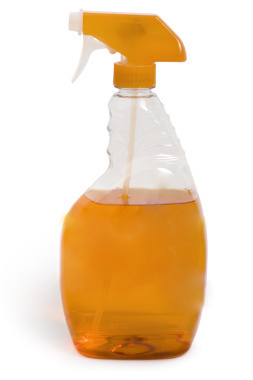
Once you’ve extracted the oil you can used it as a natural insecticide in your garden.  Instead of spraying your vegetables with a commercial pesticide that can contain harmful chemicals, you can make your own homemade pesticide with orange oil. Because it’s completely organic you can spray on the entire plant . . . including the fruits and vegetables. 


To make the orange oil insecticide you will need:

1 Tbsp. Orange Essential Oil
1 Qt. Water
Spray Bottle
1 Tsp. Cayenne Pepper

Combine 1 tbsp. of orange essential oil with 1 qt. of water in a spray bottle.

Add 1 tsp. of cayenne pepper to the mixture.

Shake the bottle to mix the oil with the water.


Spray the orange oil pesticide on vegetables to deter insects. Spray the stems, undersides of the leaves and the vegetables themselves to protect them.

Store the pesticide away from heat and direct sunlight. Shake the bottle before each use.